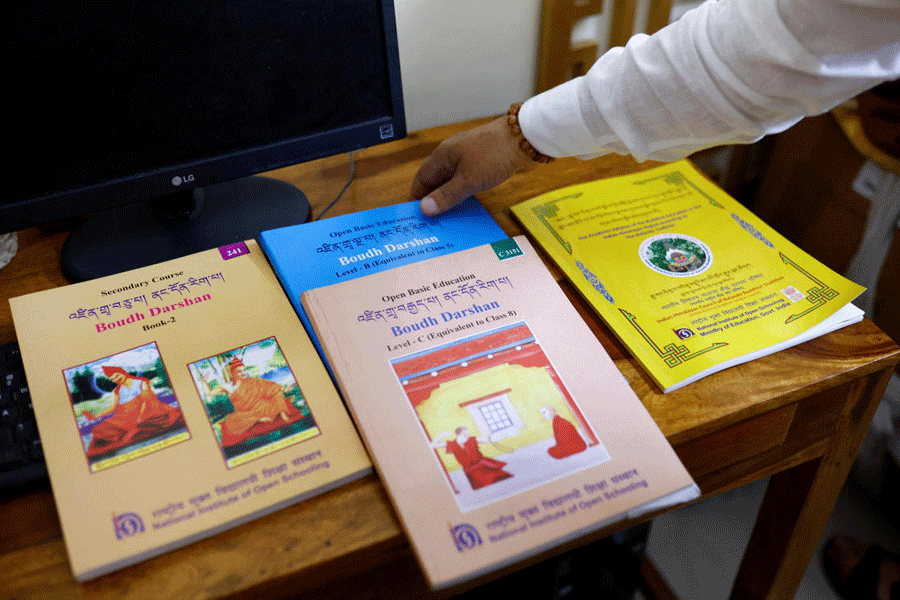
India is rolling out a standardized curriculum across roughly 600 Buddhist monasteries in Himalayan regions including https://batteryplay.in Arunachal Pradesh, Ladakh, and Sikkim to reinforce national identity and counter external influence. The Education Ministry’s initiative introduces Indian-certified courses alongside traditional monastic teachings, combining subjects like science, mathematics, computer science, and languages (English, Hindi, and Bhoti) with Buddhist philosophy. This move reflects the government’s broader vision of integrating remote communities into the mainstream education system without eroding their cultural roots.
The decision comes as part of a long-term strategic plan by New Delhi, aiming not only to modernize education in remote monastic communities but also to assert cultural sovereignty in areas that are geopolitically sensitive due to proximity to China. Under the new program, students will have access to digital learning tools, libraries, and trained teachers, enabling them to pursue recognized academic qualifications while remaining in their traditional environments. Regular examinations and certification will ensure that monastery students can compete on an equal footing with peers from mainstream schools, potentially opening doors to higher education and employment opportunities beyond the Himalayan region.
However, the initiative has faced some resistance from monks and local communities, who worry that mandatory secular education might dilute religious instruction and traditional practices. The government has responded by promising a flexible curriculum that balances spiritual teachings with modern subjects. Education officials emphasize that the reform is intended not to replace monastic education but to complement it, providing a bridge between centuries-old spiritual learning and contemporary knowledge systems.
Experts believe that, if implemented successfully, this program could become a model for other regions in India where traditional learning and modern education intersect, potentially reshaping the future of rural education and preserving cultural heritage simultaneously.